
You know the feeling. You’re standing in front of the bathroom mirror, inspecting that one line between your eyebrows that seems deeper than it was last month. You gently pull your skin back just a tiny bit with your fingertips.
You smile at the reflection. You look refreshed. Rested. A little more like the version of you that you feel like on the inside.
But then you let go, and the hesitation creeps back in.
We know exactly what goes through your mind next. You’ve seen the horror stories on social media. You’ve heard the rumors about “plastic” faces. And even though you are curious about smoothing out those frown lines, you are absolutely terrified of looking “done” or unrecognizable to your friends and family.
We hear this every single day at our clinic. It is completely normal to be cautious when it comes to your face. However, it is also time to separate the internet rumors from medical reality.
Let’s walk through the most common Botox myths and facts so you can make a choice that feels right for you—based on science, not fear.
Read our guide on the differences between Botox, Dysport, Jeuveau, and Letybo
Myth #1: “I’ll Lose My Ability to Express Emotion” (The Frozen Face)
This is the number one fear we hear from new patients: “I don’t want to look frozen.” You worry that if you treat your forehead, you won’t be able to look surprised, or if you treat your eyes, your smile won’t reach them.
Here is the truth: A “frozen” face isn’t a side effect of the product itself. It is usually the result of over-dosing, poor placement, or a “one-size-fits-all” approach.
When injected correctly by a specialist, natural looking botox results are the standard, not the exception.
Think of wrinkle relaxers like a dimmer switch, not an on/off switch. We aren’t trying to turn the lights out completely; we are just dimming them. Your face is meant to move. You should absolutely still be able to smile at a joke, frown when you’re concerned, and raise your eyebrows when you hear the latest gossip.
The goal isn’t to paralyze your face. It is simply to soften the muscle contraction just enough so the skin stops creasing.
At Royale Medical Health, we use detailed facial mapping to understand exactly how your muscles move before we ever treat them. Because we carry four distinct brands—Botox, Dysport, Jeuveau, and Letybo—we can also choose the specific product that spreads best for your unique anatomy. This customization is the secret to keeping your expressions intact while smoothing the lines.
Myth #2: “It’s Poison and It’s Unsafe”
The word “toxin” sounds scary. We get it. It’s natural to question the safety of neurotoxins when you hear the technical names.
While neuromodulators are derived from a protein found in nature, what we use in aesthetics is a highly purified, medical-grade version. It is extremely targeted. It stays exactly where we place it and does not roam through the body.
It helps to know the history. These products have been FDA-approved for cosmetic use for over 20 years. But beyond smoothing wrinkles, they are trusted by doctors worldwide to treat serious medical conditions like chronic migraines, excessive sweating (hyperhidrosis), and even muscle spasms in children.
The key factor in safety isn’t just the product—it’s the provider.
Getting injected at a “Botox party” in someone’s living room is very different from being treated in a licensed medical facility here in Albuquerque, NM. When you choose a medical environment, you are choosing safety protocols, sterility, and licensed experts who deeply understand facial anatomy.
Myth #3: “Injections Are Incredibly Painful”
If you are afraid of needles, this is likely the biggest hurdle standing between you and your results. You might be imagining a flu shot or a blood draw.
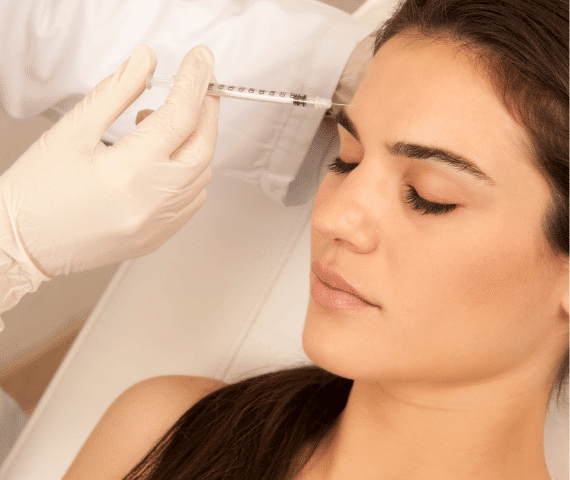
Does Botox hurt? Honestly, most patients describe it as a quick pinch, similar to a mosquito bite or plucking a single eyebrow hair.
The needles we use for these treatments are insulin-grade. They are the smallest needles available on the market—often so thin you can barely feel them enter the skin. The treatment itself is also incredibly fast, often over in just 10 to 15 minutes.
We also take your comfort seriously. If you are particularly sensitive, we can use ice packs to numb the area beforehand. We also use distraction techniques, like small vibration tools, which confuse your nerve endings so you barely feel the poke.
Many of our first-time patients sit up after their treatment, look in the mirror, and ask us, “Wait, is that it? I worked myself up for nothing!”
Myth #4: “If I Stop, My Face Will Collapse or Get Worse”
This is a huge retention fear. People worry that once you start, you are trapped on a hamster wheel forever. They fear that if they miss an appointment, or decide to stop altogether, their wrinkles will come back with a vengeance—worse than before.
That is simply not true.
Think of wrinkle relaxers as a “pause button” for aging. While the product is active, your skin has a chance to rest. It isn’t being constantly folded and creased by muscle movement.
If you decide to stop getting treatments, your muscles will just slowly “wake up.” They will gradually return to their baseline strength over 3 to 4 months. Your lines will slowly return to how they were before you started.
You won’t age faster; you just pick up exactly where you left off. In fact, because you paused the creasing for a while, you may even have fewer static lines than you would have had if you never treated them at all.
Learn the best age to start preventative Botox
Myth #5: “It’s Only for People with Deep Wrinkles”
Many people think they should wait until they are “older” to visit a med spa. They think they need to wait until deep, etched-in lines are visible on their face before they are a candidate.
Actually, waiting can make things harder.
Imagine a piece of paper. If you fold it gently once or twice, you can smooth it out flat again. But if you fold it and crease it deeply every single day for years, that crease becomes permanent. Even if you iron the paper, the line remains.
Your skin works the same way. Once a line becomes a “static wrinkle”—meaning it is visible even when your face is totally relaxed—it is much more difficult to smooth out completely with relaxers alone.
That is why “Baby Botox” or preventative dosing has become so popular for patients in their 20s and 30s. By using lighter doses earlier, you prevent the paper from ever getting that deep crease.
However, if you do have deeper lines, don’t worry. We can often combine relaxers with other treatments, like dermal fillers, to help restore volume and smoothness.
Wrinkle Relaxers vs. Dermal Fillers: Do you need both?
Moving Past the Botox Myths and Facts
Now that we’ve busted the biggest Botox myths and facts, we hope you feel a little more confident about your options.
The decision to get an aesthetic treatment is personal. You shouldn’t do it for anyone else, and you definitely shouldn’t do it if you feel unsafe or pressured. Knowledge is power, and knowing that you can achieve a refreshed look without sacrificing your expressions changes everything.
If you are still on the fence, that is okay! You don’t need to commit to a treatment to get answers.
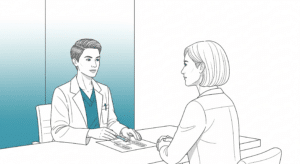
We invite you to come in for a consultation at Royale Medical Health. We can look at your skin, discuss your goals, and help you decide if Botox injections in Albuquerque are right for you. We promise: no pressure, just honest advice and a plan tailored to your face.